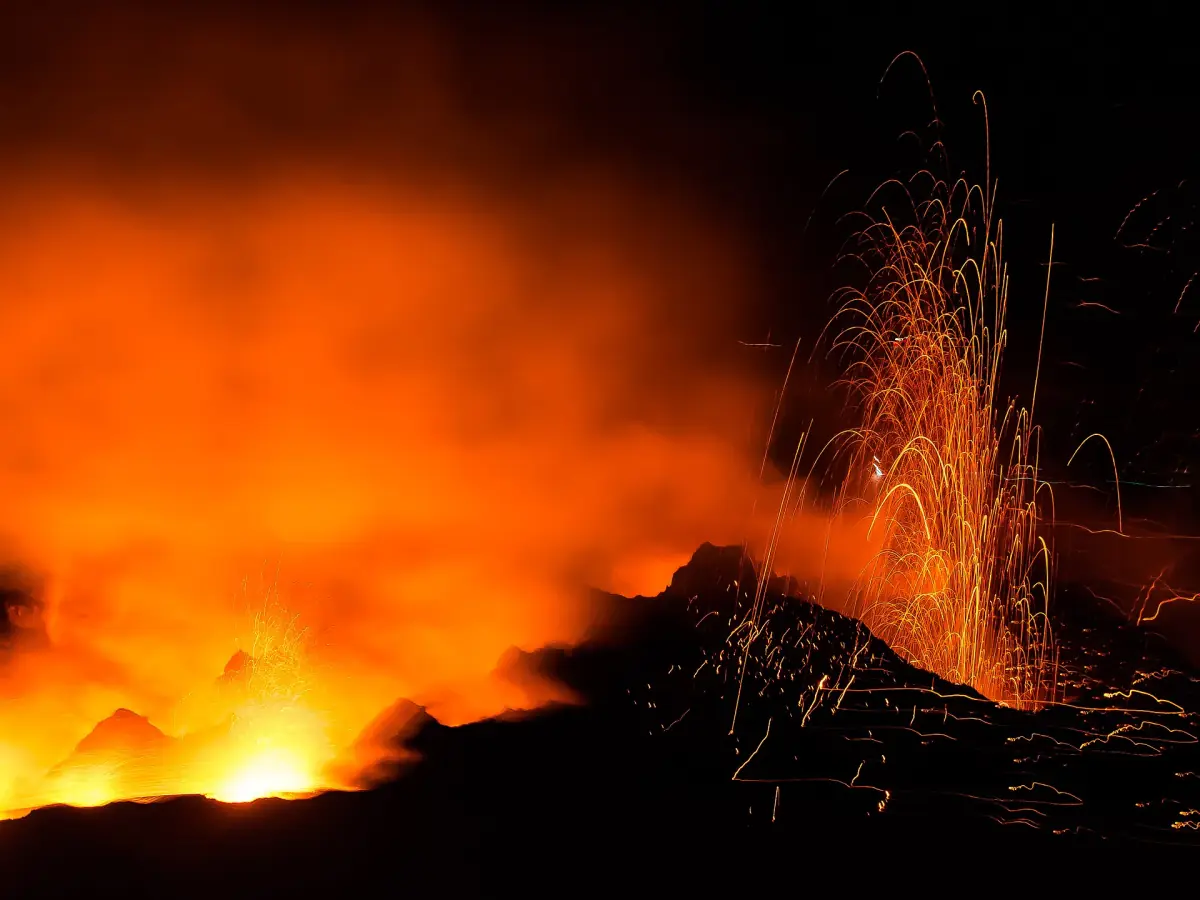
Activity and safety on Stromboli
Stromboli's persistent activity at an open vent system gave the name to Strombolian activity, the typical pattern of small, frequent explosions. For visitors this means the volcano is not a one-off event. It is a permanent feature that is monitored all the time, and what matters is how active it is on a given day and what the authorities allow.
This page is a dated snapshot, not a live feed. Check the latest bulletin of the INGV (Italy's national volcano institute) and the civil protection pages before you travel, and again on arrival. For the rules that follow from activity, read hiking and boat tours. Sicily's other big volcano is covered in is Etna active.
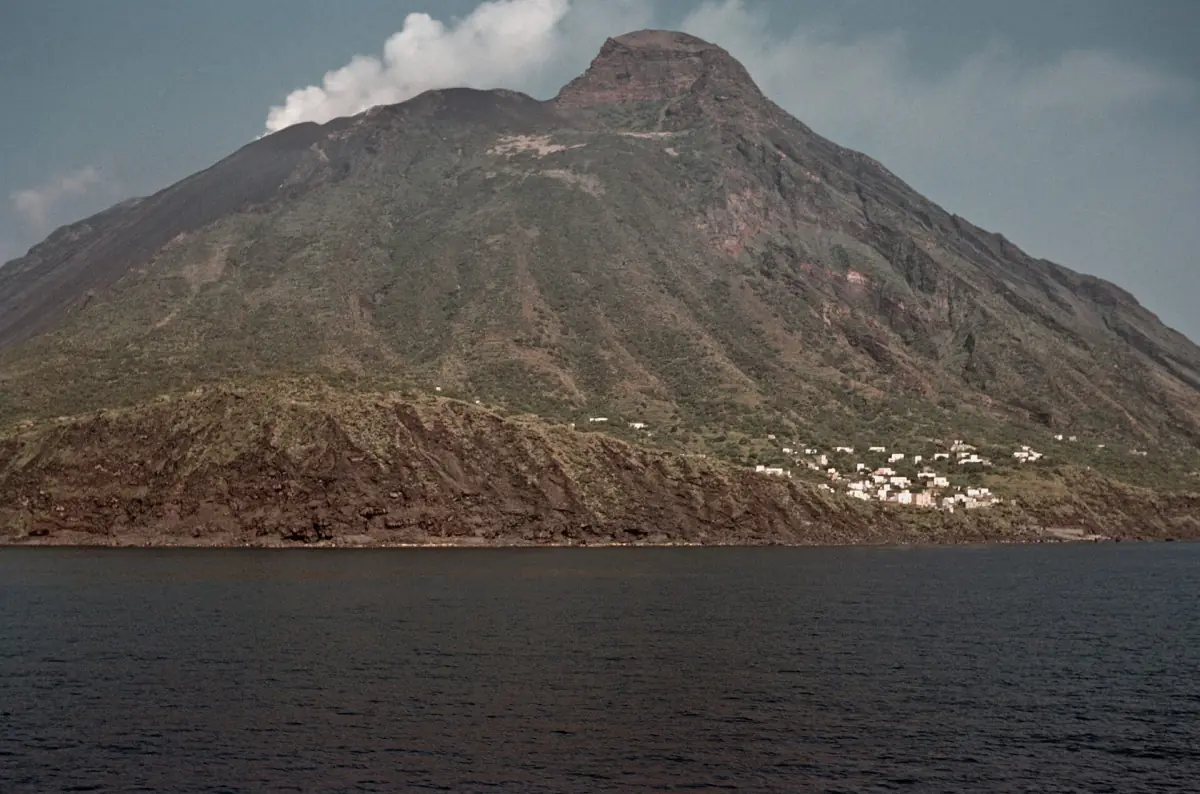
Status on 19 October 2026
Official reports read on that date. Conditions can change within hours.
INGV bulletin, 19 October, 08:46
A lava overflow from the northern crater area had been visible since about 06:00 UTC. Ordinary Strombolian activity continued. The bulletin says nothing about the rest of the day.
Day before, 18 October
At 15:27 local time INGV reported a landslide on the volcano. The first short report gave no further details, so none should be assumed.
Aviation colour code
The aviation notice (VONA) of 19 October, 06:24 UTC, showed ORANGE, as before. It mentions lava overflow on the Sciara and Strombolian activity at the summit craters.
Civil protection level
When the page of the civil protection department was read on 19 October 2026, it showed Yellow. It does not carry a time of issue, so treat it as a reading, not a forecast.
Our picks: seeing the volcano
A guided hike on the mountain or a boat that stops off the Sciara del Fuoco.
Hand-picked tours, booked through GetYourGuide. Prices are indicative starting prices in euros (as of October 2026). Tap a tour for live availability and the current price in your currency.
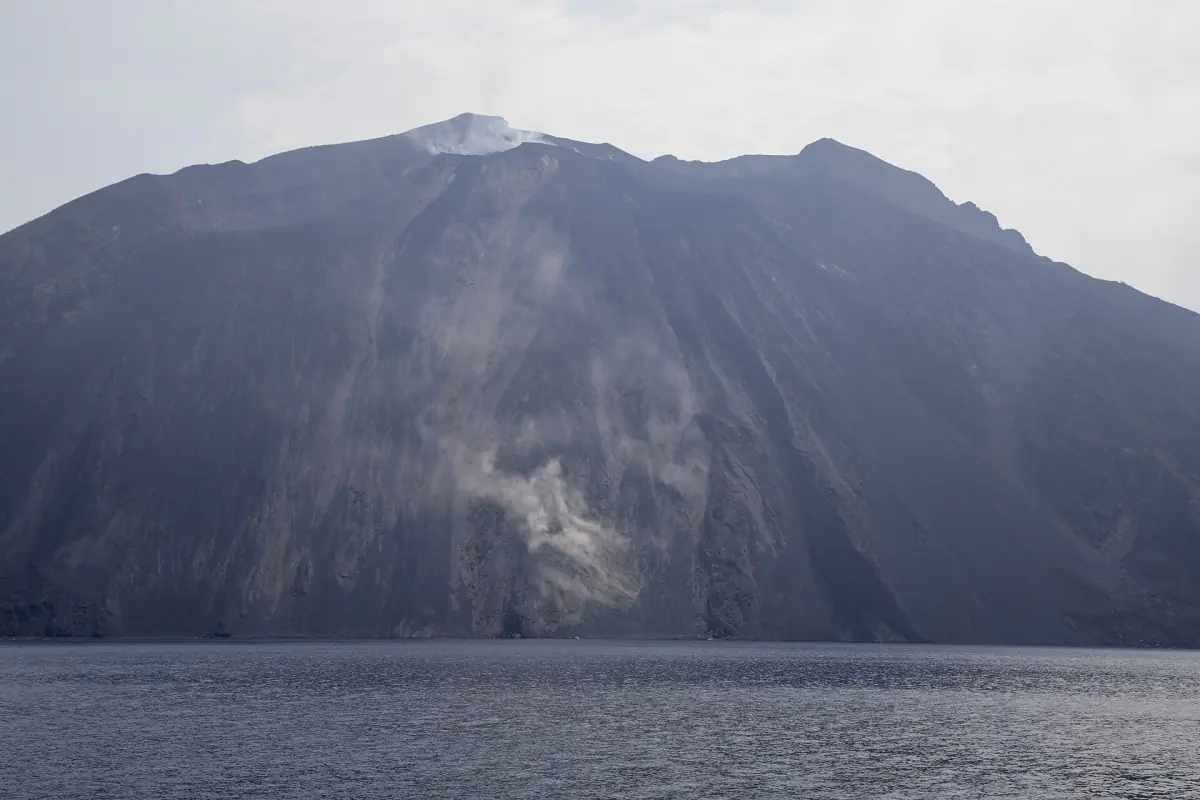
Boat cruise with stops on Panarea and Stromboli
Eight hours by motorboat with time ashore on both islands, a stop off the Sciara del Fuoco and a glass of Malvasia. There is no guide; other food and drinks are extra.
Check availability →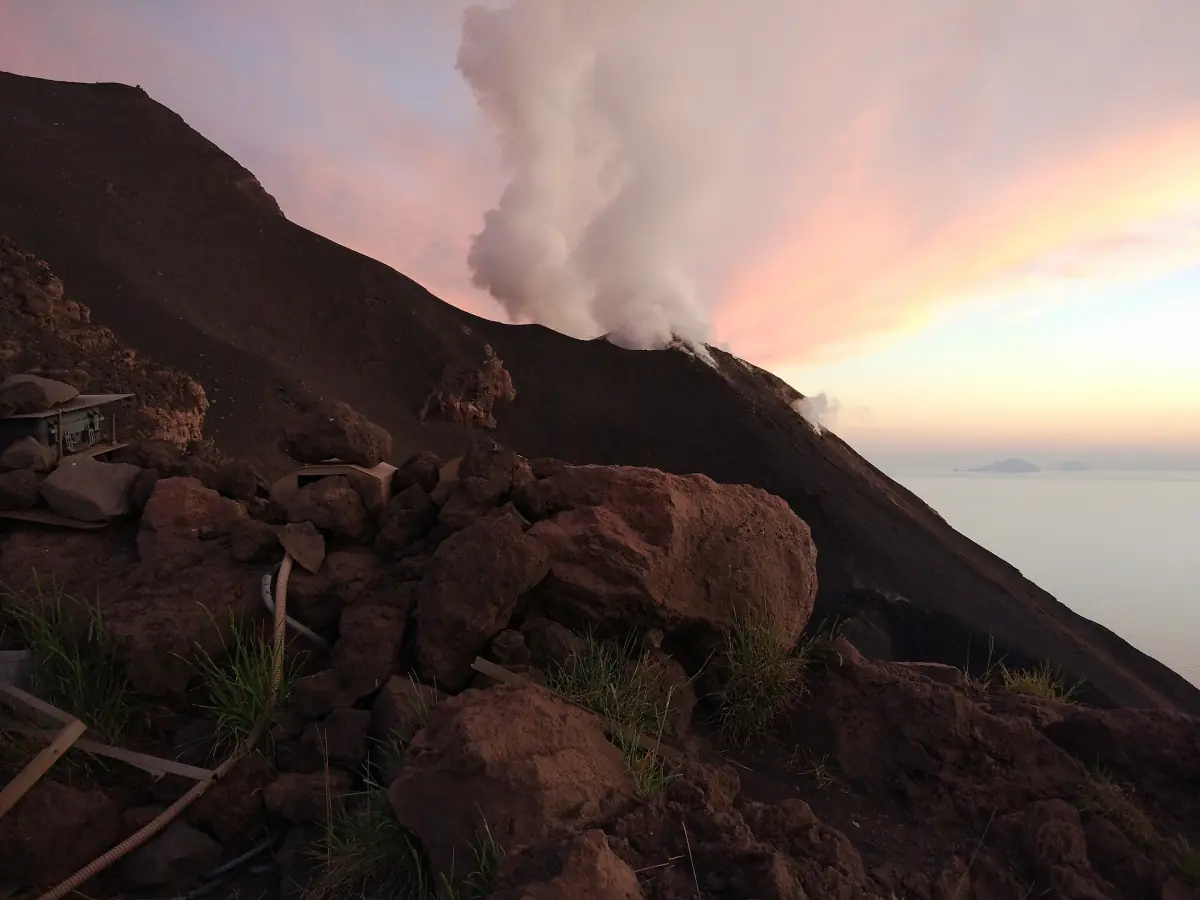
Sunset hike above the Sciara del Fuoco
Five hours with a volcano guide, helmet and headlamp.
Check availability →Stromboli tours with an evening view
Evening boat trips and guided hikes that look at the volcano's activity, with live prices and availability.
What the alert systems mean
Two colour systems that people often confuse.
| System | Issued by | What it describes | Reading on 19 Oct 2026 |
|---|---|---|---|
| Aviation colour code (VONA) | INGV | Ash risk for aircraft | ORANGE |
| Civil protection alert level | Civil protection department | Green, yellow, orange or red, derived from monitoring and observed events | Yellow |
| Activity bulletin | INGV | What the volcano is doing now | Lava overflow, Strombolian activity |
Orange in one system and yellow in the other is not a contradiction. They measure different things and cannot be converted into each other. Neither is a set of opening hours or a hiking permit. Access to trails and the sea is decided separately by ordinance, and a colour does not mean the island is open or closed.
Every alert level carries some risk
Paroxysms and tsunamis can happen suddenly, whatever the alert level is at that moment. Civil protection describes acoustic warning systems on Stromboli and in Ginostra. Know what they sound like and what you should do.
- Before you arrive: learn the escape routes and assembly areas. If you need special assistance, report it to the Comune di Lipari.
- If the siren warns of an imminent paroxysm: on the coast, beach or harbour, climb inland straight away and shelter in a building. If you are in a hollow, go up its slope. On a boat, increase your distance from the shore and head out to open sea.
- If rock or ash falls: protect your mouth, nose and eyes, shelter inside a building and follow official instructions. Tsunami and explosion warnings call for different responses, so follow the instructions on the day.
The regional authority lists Stromboli and Vulcano as active volcanoes. That is not permission to enter protected or hazardous areas.
How to read a bulletin
INGV bulletins give a time, usually in UTC (Coordinated Universal Time). Local time on Stromboli is two hours ahead of UTC in summer, so 06:46 UTC was 08:46 on the island. Always compare the time stamp with the time you read it, because a morning bulletin says little about the evening.
A bulletin describes what the volcano is doing, not what you may do. Whether a trail is open, whether a boat goes near the Sciara and whether a ferry runs are separate questions for the municipality, the harbour authority and the operator. Your guide and your skipper will know the position on the day. Do not use a colour as a substitute for their advice.
The last three months
What the official record shows.
Between 19 July and 19 October 2026, INGV's register of volcanic bulletins lists Stromboli reports on 6, 8 and 9 August and on 1, 5, 6, 12, 13, 18 and 19 October. A bulletin does not by itself mean that ferries were cancelled. Check the operator for your crossing, because weather and sea conditions also affect timetables. For the practical side, see how to get to Stromboli.
Stromboli eruptions: frequently asked questions
Is Stromboli erupting right now?
The volcano is constantly active at its summit craters. On 19 October 2026 INGV also reported a lava overflow from the northern crater area. Check the newest bulletin, because this page is a dated snapshot.
Is it safe to visit Stromboli?
People live on the island, but the volcano can produce sudden events whatever the alert level is. Follow ordinances, guides and warning signals, and know your escape routes.
What does the orange code mean?
The ORANGE code from INGV's aviation notice concerns ash risk for aircraft. It is a different system from the civil protection alert levels, and it is not a closure of the island.
What should I do if the siren sounds?
Move away from the coast, beach and harbour, go inland and shelter in a building. On a boat, increase your distance from the shore and head to open sea. Follow official instructions.
Can ferries stop because of activity or weather?
Yes. Operators set exceptions for weather that endangers safe operation, and conditions can change a timetable. Check with your operator before you travel.
Can I predict the next explosion?
No. Explosions are frequent but not on a fixed schedule, and nobody can forecast the next one precisely.